Showing posts with label science. Show all posts

Science by Press Release

As a scientist one thing I recognize that promoting ones science is an important part of a research career. Research visibility provides opportunity to make connections, further your research, obtain funding and keep your job at the University.

When publishing your research in an academic journal peer review ensures your data is valid and conclusions are justified. Most research doesn't make waves, but you hope it gains traction and forms part of the ongoing discussion in the literature through other researcher reading your and citing your work.

However academia and research has somewhat moved past the publish or perish mindset, though publications are still important. Universities now track altmetrics, which is a measure of public engagement with the research. Universities want to conduct research that has this impact, research thats groundbreaking, that produces a technology to market. This drives a push towards creating a splash and the media becomes a means of promoting discovery.

This is where self promotion creeps in as its removed from the bounds of peer review and whats publishable. When talking about your work to the press its all about telling them why they should care, how this will fundamentally change our understanding or a tech application that will revolutionize a process. At this point its where researchers often go beyond the data to potentially exaggerating the implication. In the media a relatively humble data can become an earth shattering discovery if its the right subject matter at the right time.

This is quite common in social sciences whereby not particularly rigid datasets are portrayed in the media as demonstrating clear links or causation between factors, when there are many potentially confounding variables.

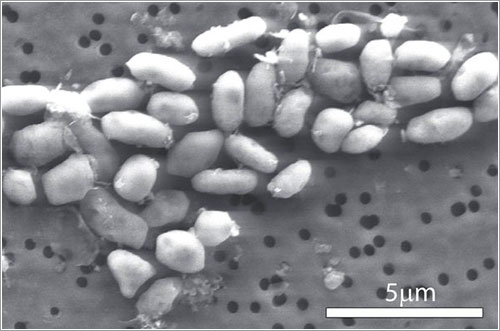
A fascinating example comes from a few years ago, with the so called discovery of a microbe that incorporated arsenic in place of phosphorus. Even NASA got in on the promotion, despite most in the biochemistry field being highly skeptical. The paper was published in Science, but the data itself did not clearly demonstrate arsenic was incorporated into the DNA. When the paper appeared in print it was eventually accompanied by 8 technical notes pointing out the issues with the study and the authors conclusions.

The study received a lot of attention in the media and the head researcher did not hold back in proclaiming the implications of the study that would fundamentally alter our understanding of life , or that there could be whole shadow biosphere of microbes utilising arsenic.

The problem was biochemist knew this was impossible due to the fact that arsenic esters are too unstable and hydrolise readily compared to phosphate diesters which don't readily hydrolise. Of course the media not being biochemists did not pick up on this.

Later studies on the bacteria strain failed to detect arsenic in DNA and noted the bacteria likely utilised trace phosphate that contaminated the growth medium and arsentate utilised.

You can read more about it on wikipedia: https://en.wikipedia.org/wiki/GFAJ-1


Ken Ham vs Bill Nye Debate - What can we take from it


One thing I've noted from proponents of evolution (well those that prominantly speak out) is the seemingly earnest belief that they're are no presuppositions that enter into the science. That there is a pure objectivity.

But no scientist is without a worldview, an a priori philosophy that infleuences the way they think. Infact these people often have a staunch materialist philosophy and ascribe science the ability to determine truth.

This brings me to the debate between Bill Nye "The Science Guy" and Ken Ham (of answers in genesis). I'd first like to refer to Albert Mohlers fantastic analysis of the debate:


Here's my thoughts:

Ken ham stuck to the YEC manifesto (I presonally would have liked to see mainly scienctific ideas debated, because I'm not sure how useful argiung for biblical authority is in that context, but that's is AIG's schtick so I guess it's not necessarily surprising). I enjoy wazooloos series on youtube for that reason: he primarily discusses scientific findings from a YEC point of view.

As for Bill Nye, I'd like to discuss his somewhat ideological and naive view on the purity and objectivity of scientifc pursuit.

He himself admits in the debate that there could be no evidence that would convince him of creation. Yet, at the same time insists there is no presupposition and has faith in the self correcting nature of science. However, when it comes to evolution, this most certainly isn't true. For any science, the less is relies on raw empirical data the less objective it is. All data is interpreted but there is only so much you can add your own slant to raw data.

Evolution has fossils (which apart from interpretation don't tell you anything except that an organism lived and no longer exists) the rest the theory projects onto the fossil (ie the fossil record represents the transition from simple to complex organisms from a common ancestor. But, that is not a given. You can assemble fossil data into an overall narrative, but that is by no means definitive. And the notion that all fossils confirm evolution is propaganda. Scientists find confounding discoveries routinely and the evolutionary narrative adapts in one way or another (the theory has so much flexibility to accommodate unexpected findings one has to question if it is meaningfully falsifiable).

I'd also like to bring up the ability of science to self correct. Its arguable that the current system makes paradigms extremely hard to budge, especially those sacred cows of the evolutionary narrative. Questioning of the sufficiency of neo Darwinian explanations to explain what is observed have been buried for years before dissent has been allowable. However, school textbooks continue to tow the line that all evidence points to the standard Darwinian narrative being correct, when this is no longer true.


A good example of evolution not correcting itself in favour of maintaining the narrative is the finding of the transitional fossil Tiktaalik. It was at the time an iconic find, a transitional form between fish and tetrapods found in rocks that predicted it would be. It was widely reported in the press. Yet years later, tetrapod footprints were found in rocks in Poland dating 20 million year earlier than Tiktaalik.


 Yet rather than admit they were back to square one on tetrapod evolution, Tiktaalik is still trotted out as a transitional form inspite of the evidence now saying otherwise. Of course, there wasn't much media attention and the original discoverer of Tiktaalik is not so keen to relinquish the title of transitional form for Tiktaalik either.

Shutting down discussion of Intelligent Design rather than dealing with it critically


I've had a few blog posts stored up and wanted to post this one in light of the attack on ID over the course of this year.

This link describes but one example:
Free Thought Advocate Aggressively Shuts down course on ID

Ironic isn't it?

 I note a certain attitude of advocates for evolution in the public sphere to take a rather dogmatic approach to dealing with critics of evolution. It's as though any alternative to a naturalistic explanation is seen as a threat or dissent to science.

I think proponents of evolution over reach in their eagerness to champion the field. That the meta narrative of evolutionary theory is accepted by scientists shouldn't exclude critical examination of individual evidences and questioning of those individual pieces. These individual evidences in the literature are often challenged in time as new insight comes to light.

Therefore it strikes me as odd that there should be such a reaction when someone who identifies with intelligent design or creation, where the criticism is thrown aside in favour of ad hominem attacks. I have witnessed this in many forums including debates where those arguing for naturalistic evolution lean toward personal derision over mounting an evidential argument for evolution as if there job is already done.

Some evidences for evolution are very much open to interpretation and aren't without controversy. Teaching the controversy is an argument that many in the ID and creation camps advocate, but are met with quite strong resistance. There is no controversy the evolutionary advocates say. That seems to me to be a little dishonest. Many of the iconic findings for evolution have later come to be questioned in the literature, yet very rarely is this acknowledged in textbooks or in public discourse. We're talking everything from fossils said to be human-ape ancestors, junk dna and even the central mechanism of mutation and natural selection. My university textbook from 2002 was rather out of date in terms of discussion of particular evolutionary finds. Several of which have been found to be false, some even prior to the production of the textbook.

Instead of getting worked up about some anti-science push, lets enrich the conversation around our planets history and set aside largely philosophical antagonism towards those who think intelligent design is the best explanation for what we observe. 


Atheists are Wrong - The Problem of Evil


You may have seen this quote floating around the web:

Is God willing to prevent evil, but not able? Then he is not omnipotent. Is he able, but not willing? Then he is malevolent. Is he both able and willing? Then whence cometh evil? Is he neither able nor willing? Then why call him God?


One of the things New Atheists love to do is moralise about different topics including the suffering in the world. They themselves don't have any real answers, but they attack that provided by a Christian world view of a good God. This quote seems to be a favourite of theirs.

This quote is typically seen as a knock down argument, for which there is no objections. But that is really only true if God must conform to the atheist expectation, which tends to lean towards humanism. If God is good then he would act according to humanist principals. But there is a short-sightedness to this view.

Their objections seem to ignore that Christianity answers the problem of evil in the first few chapters of the bible.They also ignore the fact that Christians believe in eternity of the soul, which puts things in a different perspective. To atheists death is the ultimate offence, especially that of one seen to be innocent or undeserving, nevermind the fact that the atheists worldview doesn't really have an objective basis for their moral outrage.

Take the biblical account of the flood for example. The atheists would deny God has any right to take life, especially not if he is to be considered 'good'. But this is merely an assertion appealing to an objective morality in which the taking of life is always wrong. The atheist also denies the right of God to judge sin, which if you ask me is mighty presumptuous.

Here is a question I would like to pose:

-Do you believe in the dealth penalty as a punishment?
-Would you say that there is 'evil' in the world?
-Would you shoot someone dead if they broke into your house and threatened your family?
-Should God intervene to stop evil?

See there seems to be a double standard at play here: The atheist objects to Gods intervention in the bible for example sending the flood, but then they ask where was God when insert bad event here happened.

Do you want God to judge evil or not? The world was full of evil so God sent the flood. He saved - as an act of Grace Noah and his family.

He has also saved the nation of Israel and sent his son to die on the cross to overcome evil. But Gods direct intervention has been limited since he gives us free will. In order to prevent the evil that man does to one another then he would have to take away our free will. He did however show us the way through his word. The principles Jesus gave us to live by are truly beautiful and transforming.

Free will has a big upside: we are free to live and love, and express. We aren't just God worshipping automatons.

Is it good that people experience suffering at the hands of others they do not deserve. Absolutely not, but suffering in this world will fade in the grand scheme of eternity; an eternity free from suffering.